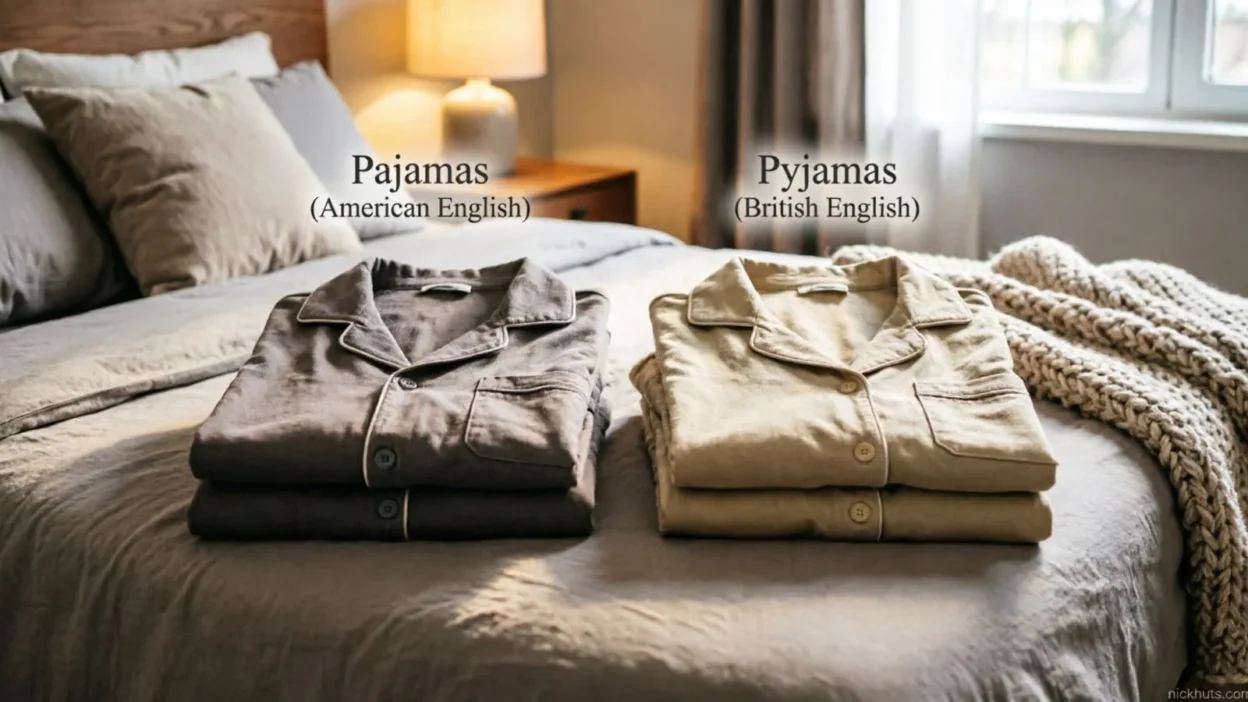
Pajamas vs Pyjamas depends on your audience, where they are located, and whether they expect American English or British English spelling. Choosing the right version helps readers connect with your content more naturally. From my experience editing for different regions, using the local form always makes writing feel more familiar and professional.
If your readers prefer American English, the usual spelling is Pajamas. In British English, Pyjamas is the preferred spelling. Across the English-speaking world, different countries follow different conventions. Canada, the Philippines, and India commonly use Pajamas, although the preference in India is by a narrow margin, so both spellings are widely understood.
The best choice is to match your spelling with your readers instead of mixing both forms in the same piece. If you spell it correctly depends on your audience, and keeping your style consistent makes every version look professional, reduces confusion, and gives readers exactly what they expects.
Quick Answer
- Pajamas is the American English spelling.
- Pyjamas is the British English spelling.
- Both words mean the same thing.
- Both describe clothes people wear for sleeping.
- Neither spelling is more correct than the other.
- Choose the spelling that matches your audience or the English style you are using.
- Stay consistent throughout your writing.
Where Do the Words Come From?
The word has an interesting history.
Long ago, people in South Asia wore loose, comfortable trousers. The word came from languages spoken in that region. Later, the word entered English during the time of British rule in India.
As English spread to different countries, the spelling changed.
- British English kept the spelling pyjamas.
- American English later changed it to pajamas.
Even though the spellings are different, both words still describe the same type of sleepwear.
What Is the Difference Between Pajamas and Pyjamas?
There is only one real difference: spelling.
The meaning, pronunciation, and use are almost the same.
Pajamas
- Used mainly in the United States.
- Common in American books, schools, stores, and websites.
- Preferred in American English writing.
Example:
I bought a new pair of pajamas yesterday.
Pyjamas
- Used mainly in the United Kingdom.
- Common in British books, newspapers, and schools.
- Preferred in British English writing.
Example:
She packed her pyjamas before the trip.
If someone says either word, native speakers understand exactly the same thing.
Pajamas vs Pyjamas Comparison Table
| Feature | Pajamas | Pyjamas |
|---|---|---|
| Meaning | Clothes for sleeping | Clothes for sleeping |
| English style | American English | British English |
| Pronunciation | Almost the same | Almost the same |
| Correct spelling | Yes | Yes |
| Used in the USA | Very common | Rare |
| Used in the UK | Less common | Very common |
| Meaning changes? | No | No |
Which One Should You Use?
The best spelling depends on who will read your writing.
Use Pajamas if:
- You are writing in American English.
- Your readers are in the United States.
- Your school or workplace follows American spelling.
- You are writing for an American audience.
Example:
The children wore warm pajamas during winter.
Use Pyjamas if:
- You are writing in British English.
- Your readers are in the United Kingdom.
- Your school follows British spelling.
- You are writing for British readers.
Example:
My pyjamas are made of soft cotton.
The Most Important Rule
Pick one spelling and use it throughout your writing.
Do not switch between pajamas and pyjamas in the same article unless you are explaining the difference.
Common Mistakes People Make
Many learners make small mistakes because both spellings exist.
1. Thinking one spelling is wrong
This is not true.
Both spellings are correct.
2. Mixing American and British spelling
Incorrect:
I bought new pajamas, and my favourite pyjamas are blue.
Correct:
I bought new pajamas, and my favorite pajamas are blue.
Or:
I bought new pyjamas, and my favourite pyjamas are blue.
3. Believing they have different meanings
Both words mean exactly the same thing.
4. Changing spelling in the middle of a document
Choose one spelling and keep using it.
5. Thinking pronunciation is very different
Most speakers pronounce both words almost the same way.
Everyday Real-Life Examples
Here are examples showing how each spelling appears in daily life.
In an Email
American English:
Please remember to pack your pajamas for the sleepover.
British English:
Don’t forget your pyjamas for the school trip.
In the News
American style:
Stores are selling holiday pajamas for families.
British style:
Shops are offering new winter pyjamas.
On Social Media
American English:
Just relaxing in my pajamas and watching movies.
British English:
Sunday mornings are best in comfy pyjamas.
In Daily Conversation
American English:
Where are my pajamas?
British English:
Have you washed my pyjamas?
Shopping
American English:
I need new cotton pajamas.
British English:
These pyjamas look very comfortable.
Easy Memory Trick
Remember this simple tip:
- Pajamas = America
- Pyjamas = Britain
If you see a “y,” think of British English.
If you see only “a,” think of American English.
This memory trick helps many students remember the difference quickly.
Learning Tips for Students and Beginners
If you are learning English, these simple habits can help.
Read Different Types of English
Read books and articles from both American and British writers. You will notice the spelling difference naturally.
Follow One Style
If your teacher asks for American English, always write pajamas.
If your class uses British English, always write pyjamas.
Practice Writing
Write simple sentences such as:
- I wear pajamas every night.
- My pyjamas are blue.
- These pajamas are comfortable.
- I packed my pyjamas for the holiday.
Notice the Audience
Before writing, ask yourself:
- Is this for American readers?
- Or is it for British readers?
The answer tells you which spelling to use.
FAQs:
1. Is pajamas correct?
Yes. Pajamas is the standard American English spelling.
2. Is pyjamas correct?
Yes. Pyjamas is the standard British English spelling.
3. Do both words mean the same thing?
Yes. Both words refer to clothes worn for sleeping.
4. Which spelling is more common?
It depends on the country.
- America mostly uses pajamas.
- Britain mostly uses pyjamas.
5. Can I use either spelling?
Yes, but you should stay consistent. Do not mix both spellings in the same piece of writing unless you are comparing them.
6. Are they pronounced differently?
Usually, no. Most people pronounce them almost the same way.
7. Which spelling should students learn?
Learn the spelling that matches the English style used by your school, teacher, or exam.
8. Will people understand both spellings?
Yes. English speakers around the world generally understand both pajamas and pyjamas.
Conclusion
The difference between pajamas and pyjamas is very simple. Both words mean clothes worn for sleeping.
The only real difference is the spelling. Pajamas is the American English form, while pyjamas is the British English form. Neither spelling is better than the other.
Simply choose the one that matches the type of English you are using and stay consistent. Once you remember this simple rule, you can use either spelling with confidence.