
She Has vs She Have often confuses learners, but knowing the correct English grammar rule makes choosing the right verb much easier every time. Many beginner students ask whether she takes has or have.
In standard English, she is a singular subject pronoun, so has is the normal verb choice. A simple example is “She has a degree,” which follows the basic grammar pattern.
There are situations where she have is also correct. It appears in a subordinate clause that uses the subjunctive mood. You may suggest a sentence like, “I suggest that she have an English degree.”
In this case, the pattern changes because of the subjunctive, not because the subject is different.
The easiest way to understand the difference is to focus on the sentence structure. When she is the main subject, use has with a singular verb. If a subordinate clause follows words like suggest, the subjunctive mood may require have instead.
Paying attention to the pronoun, clause, grammar pattern, and form helps learners avoid mistakes and use the correct choice with confidence. People often apply this simple rule to improve their writing and speaking.
Quick Answer
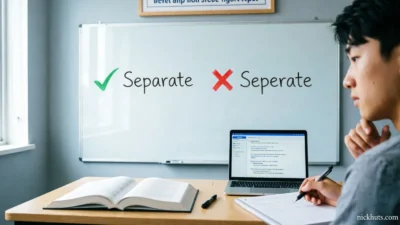
- ✅ She has is correct in normal present tense sentences.
- ❌ She have is not correct in standard English.
- Use has with she, he, and it.
- Use have with I, you, we, and they.
- The only time you may see she have is after certain helping verbs like doesn’t, didn’t, will, can, or might, where the main verb stays in its base form.
Quick Examples
- ✅ She has a new laptop.
- ✅ She has finished her homework.
- ❌ She have a new laptop.
- ✅ She doesn’t have a new laptop.
- ✅ She will have enough time tomorrow.
The Simple Background
The verb have has different forms depending on the subject.
In the present tense:
- I → have
- You → have
- We → have
- They → have
- He → has
- She → has
- It → has
English has used this pattern for hundreds of years. Today, it is one of the first grammar rules students learn because it appears in everyday speaking and writing.
What Is the Difference Between “She Has” and “She Have”?
The difference is based on subject-verb agreement.
When the subject is she, the verb changes from have to has.
Correct
- She has a bicycle.
- She has two sisters.
- She has many books.
Incorrect
- She have a bicycle.
- She have two sisters.
- She have many books.
Think of it this way:
- She = has
- I, You, We, They = have
This simple rule works almost every time.
Comparison Table
| Feature | She Has | She Have |
|---|---|---|
| Standard English | ✅ Correct | ❌ Incorrect alone |
| Present tense | ✅ Yes | ❌ No |
| Used with “she” | ✅ Yes | ❌ No |
| Used after helping verbs | ❌ No | ✅ Yes |
| Formal writing | ✅ Yes | ❌ No |
| Everyday conversation | ✅ Yes | ❌ No (unless after a helping verb) |
When Should You Use “She Has”?
Use she has whenever you are making a normal statement in the present tense.
Talking about ownership
- She has a beautiful house.
- She has a blue backpack.
- She has three dogs.
Talking about family
- She has one brother.
- She has two children.
Talking about health
- She has a cold.
- She has a headache.
Talking about experiences
- She has visited London.
- She has learned French.
Talking about feelings
- She has a lot of confidence.
- She has great patience.
When Can You Use “She Have”?
Normally, you cannot say she have by itself.
However, have is correct after certain helping verbs because the main verb stays in its base form.
Examples:
After “does”
- Does she have a car?
- Does she have enough money?
After “doesn’t”
- She doesn’t have time.
- She doesn’t have any questions.
After “did”
- Did she have lunch?
- Did she have fun?
After modal verbs
- She will have a meeting.
- She can have another chance.
- She should have more practice.
- She might have the answer.
- She could have helped.
Notice that has disappears after these helping verbs.
Easy Rule to Remember
Ask yourself one question:
Is there a helping verb before “have”?
If NO
Use has.
- She has a job.
- She has a ticket.
If YES
Use have.
- Does she have a job?
- She doesn’t have a ticket.
- She will have a meeting.
This one question solves most grammar mistakes.
Common Mistakes People Make
Mistake 1: Using “have” after “she”
❌ She have a new phone.
✅ She has a new phone.
Mistake 2: Using “has” after “does”
❌ Does she has a car?
✅ Does she have a car?
Mistake 3: Using “has” after “will”
❌ She will has enough time.
✅ She will have enough time.
Mistake 4: Mixing verb forms
❌ She have finished her work.
✅ She has finished her work.
Mistake 5: Forgetting subject-verb agreement
Always remember:
- He has
- She has
- It has
Not:
- He have
- She have
- It have
Everyday Real-Life Examples
At School
Teacher: She has completed her project.
Student: She has the correct answer.
Principal: She has excellent attendance.
At Work
She has an important meeting today.
She has finished the report.
She doesn’t have any free time this afternoon.
In Emails
She has attached the file.
She has received your message.
She will have the documents ready tomorrow.
In News Reports
She has won the competition.
She has announced her decision.
She has opened a new business.
On Social Media
She has posted new photos.
She has reached one million followers.
She has shared a helpful video.
At Home
She has dinner at seven.
She has a friendly dog.
She has plenty of books.
Practice Sentences
Choose the correct option.
- She (has / have) a new dress.
✅ Has
- Does she (has / have) any pets?
✅ Have
- She will (has / have) enough time.
✅ Have
- She (has / have) a good idea.
✅ Has
- She doesn’t (has / have) a driver’s license.
✅ Have
Memory Trick
Remember this short sentence:
Everything else uses have.
Another easy reminder:
- I have
- You have
- We have
- They have
- She has
If there is a helping verb like does, did, can, or will, use have instead.
Learning Tips for Students and Beginners
Learning grammar becomes easier when you practice small sentences every day.
Try these ideas:
- Read simple English books.
- Listen to English conversations.
- Write five sentences using she has every day.
- Change those sentences into questions.
- Practice with friends or classmates.
- Read your sentences aloud.
The more you see the correct pattern, the easier it becomes to remember.
FAQs:
1. Is “she have” correct?
Usually, no. In normal present tense sentences, you should say she has.
2. Why do people sometimes say “she have”?
It usually happens because they are still learning English or because their first language uses different grammar rules.
3. Why do we say “Does she have” instead of “Does she has”?
The helping verb does already shows the tense, so the main verb stays as have.
4. Which is correct: “She has a car” or “She have a car”?
She has a car is correct.
5. Can I use “she have” after “will”?
Yes.
Example:
- She will have enough money.
6. Is “she has” used in formal writing?
Yes. It is correct in both formal and informal English.
7. Does “she has” work with the present perfect tense?
Yes.
Examples:
- She has finished her homework.
- She has arrived.
- She has called her friend.
8. What is the easiest rule to remember?
Remember:
He, She, It = Has
If there is a helping verb like does, did, will, or can, use have instead.
Conclusion
Understanding she has vs she have is much easier than it first seems.
In ordinary present tense sentences, always use she has because has matches the subject she. Using she have by itself is not correct in standard English.
The only time have appears with she is after helping verbs such as does, did, will, can, should, or might.
By remembering this simple rule and practicing with everyday examples, you will avoid one of the most common grammar mistakes and speak and write English with greater confidence.