
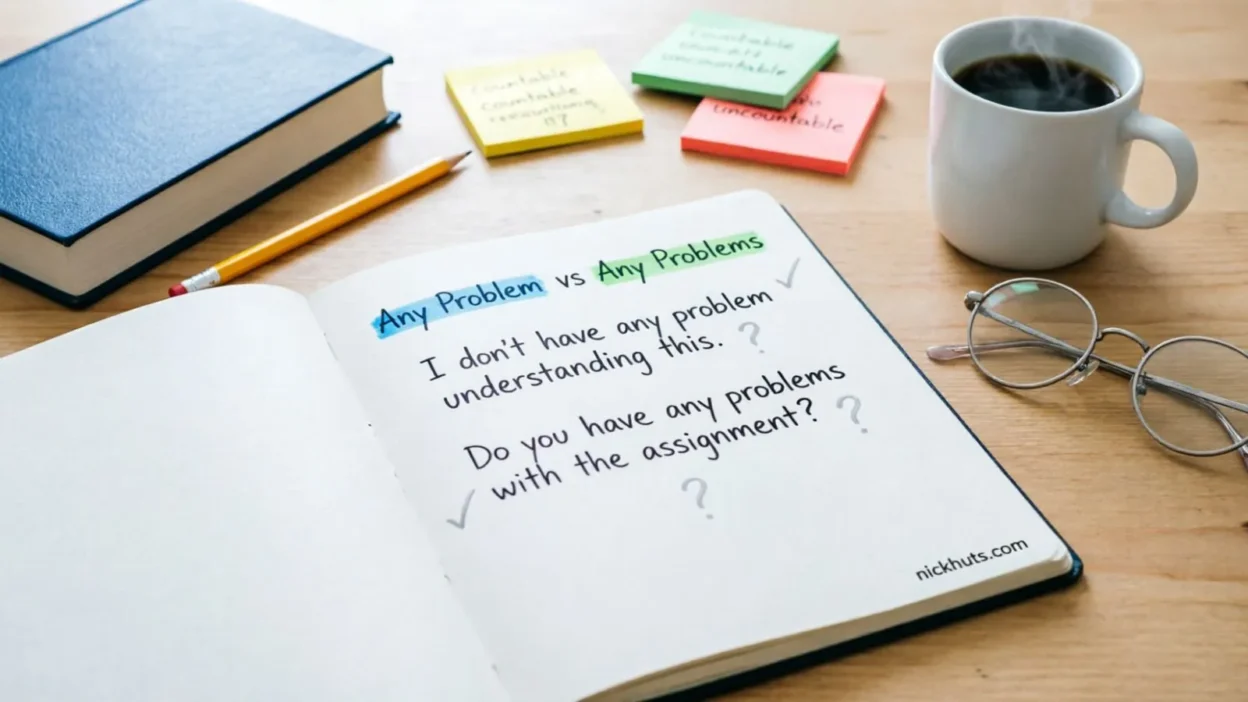
Understanding Any Problem vs Any Problems is easier when you learn the difference through real English examples instead of memorizing rules.
The difference is quite simple once you understand the grammar behind both forms.
They are both grammatically correct, and each has correct usage in English. The right choice depends on the context. From my experience helping learners, I have found that improving understanding of each form makes writing much clearer, more natural, and easier to remember.
When you use any problem, you usually refer to a singular issue or situation. Any problems is the better choice when talking about plural issues or more than one possible difficulty.
This grammatical choice changes the meaning of a sentence, so think carefully about your wording and what you want to express before choosing either form. The best option always depends on the context, especially when the meaning is depending on context.
With regular practice, the habit of choosing between any problem and any problems becomes more natural. Your communication also becomes clearer as you observe how native speakers build a sentence and improve their wording.
Over time, this approach will improve your skills, help you select the correct form confidently, and make your writing sound more naturally.
Quick Answer
- Any problem is usually used when talking about one possible problem or a single issue.
- Any problems is used when talking about one or more possible problems.
- In everyday English, any problems is much more common in questions.
- Both are grammatically correct, but the meaning is slightly different.
- When you are unsure, any problems is usually the safer and more natural choice.
Where Does This Difference Come From?
The difference comes from how English uses singular and plural nouns.
The word problem is a countable noun. That means it can be counted.
Examples:
- one problem
- two problems
- many problems
The word any can be used with both singular and plural countable nouns.
For example:
- If you have any problem, call me.
- If you have any problems, call me.
Although both sentences are correct, they do not sound exactly the same. The singular form points to one possible issue, while the plural form leaves room for one or many issues.
Over time, native English speakers began using any problems more often in everyday conversations because it sounds more natural in many situations.
Any Problem vs Any Problems: The Main Difference
The easiest way to remember the difference is to think about how many problems you are talking about.
Use any problem
Choose the singular form when you are thinking about one possible problem or speaking in a more general way.
Examples:
- If you have any problem, let me know.
- Call me if there is any problem.
- Report any problem immediately.
These examples focus on a single issue that may happen.
Use any problems
Choose the plural form when you mean one or more possible problems.
Examples:
- Do you have any problems?
- Did you find any problems?
- Are there any problems with the report?
- Have you noticed any problems?
This form is the one you will hear most often in everyday English.
Comparison Table
| Feature | Any Problem | Any Problems |
|---|---|---|
| Number | Singular | Plural |
| Meaning | One possible problem | One or more possible problems |
| Common in questions | Less common | Very common |
| Common in instructions | Yes | Yes |
| Sounds natural in daily conversation | Sometimes | Usually |
| Example | If you have any problem, call me. | Do you have any problems? |
Which One Should You Use and When?
Choosing between any problem and any problems depends on what you want to say.
Use any problem when:
- You are talking about one possible issue.
- You are giving instructions.
- You are discussing a general situation.
Examples:
- If you have any problem, contact support.
- Tell your teacher if you have any problem.
- Stop working if there is any problem.
Use any problems when:
- You are asking about possible issues.
- You are checking whether something went wrong.
- You are talking about more than one possible problem.
Examples:
- Do you have any problems?
- Were there any problems during the meeting?
- Have you experienced any problems today?
- Are there any problems with your computer?
In everyday English, questions usually sound more natural with any problems.
Common Mistakes People Make
Here are some mistakes that learners often make.
Mistake 1
❌ Do you have any problem?
✅ Do you have any problems?
The plural form sounds more natural in everyday conversation.
Mistake 2
❌ There are any problem.
✅ There is a problem.
✅ There are problems.
The verb must match the noun.
Mistake 3
❌ I don’t have any problem at all.
✅ I don’t have any problems at all.
Both are possible, but the plural version is much more common.
Mistake 4
❌ We found any problems.
✅ We found some problems.
Use some instead of any in positive statements like this.
Everyday Real-Life Examples
In Emails
- Please let me know if you have any problems.
- Contact us if you have any problem during installation.
- Did you experience any problems with your order?
At School
- Do you have any problems with this lesson?
- Ask your teacher if you have any problem.
- Have you solved all the problems?
At Work
- Are there any problems with the project?
- Tell your manager if there is any problem.
- We did not find any problems in the report.
On Social Media
- Is anyone having any problems with the new app?
- Let us know if you have any problem signing in.
- Many users reported problems today.
In Daily Conversation
Person A: Did you have any problems on the trip?
Person B: No, everything went well.
Person A: If you have any problem, call me.
Person B: Thanks. I will.
Person A: Are there any problems with the printer?
Person B: No, it is working perfectly.
Learning Tips for Students and Beginners
Remember these simple rules.
- Problem means one issue.
- Problems means more than one issue or any possible issues.
- In most questions, any problems sounds more natural.
- In instructions, both forms may be correct depending on the meaning.
- Listen to how native speakers ask questions. You will often hear any problems.
An easy trick is this:
Question about possible issues? → Use any problems.
Talking about one possible issue? → Use any problem.
This simple idea will help you choose the right form in most situations.
FAQs:
1. Is “any problem” grammatically correct?
Yes. It is grammatically correct when talking about one possible problem or a general single issue.
2. Is “any problems” grammatically correct?
Yes. It is also grammatically correct and is more common when asking whether someone has one or more problems.
3. Which one is more common in everyday English?
Any problems is more common, especially in questions and casual conversations.
4. Why do people usually say “Do you have any problems?”
Because they are asking whether there is one problem or several problems. The plural form sounds more natural in this type of question.
5. Can I say, “If you have any problem, call me”?
Yes. This sentence is correct because it refers to one possible problem that may happen.
6. Can I say, “If you have any problems, call me”?
Yes. This is also correct and is probably the version you will hear most often in everyday English.
7. Which form should beginners use?
If you are asking a question, use any problems. It is the safest and most natural choice.
8. Is there a big difference in meaning?
No. The difference is small. The singular form focuses on one possible problem, while the plural form includes one or more possible problems.
Conclusion
Understanding any problem vs any problems is easier than it first seems. Both expressions are correct, but they are used in slightly different ways.
Any problem usually refers to one possible issue, while any problems refers to one or more possible issues and is much more common in everyday English.
If you are asking someone whether everything is okay, Do you have any problems? is usually the most natural choice. If you are giving instructions, both forms can work depending on the meaning you want to express.
With regular practice and by paying attention to real conversations, choosing between these two expressions will soon become natural.