
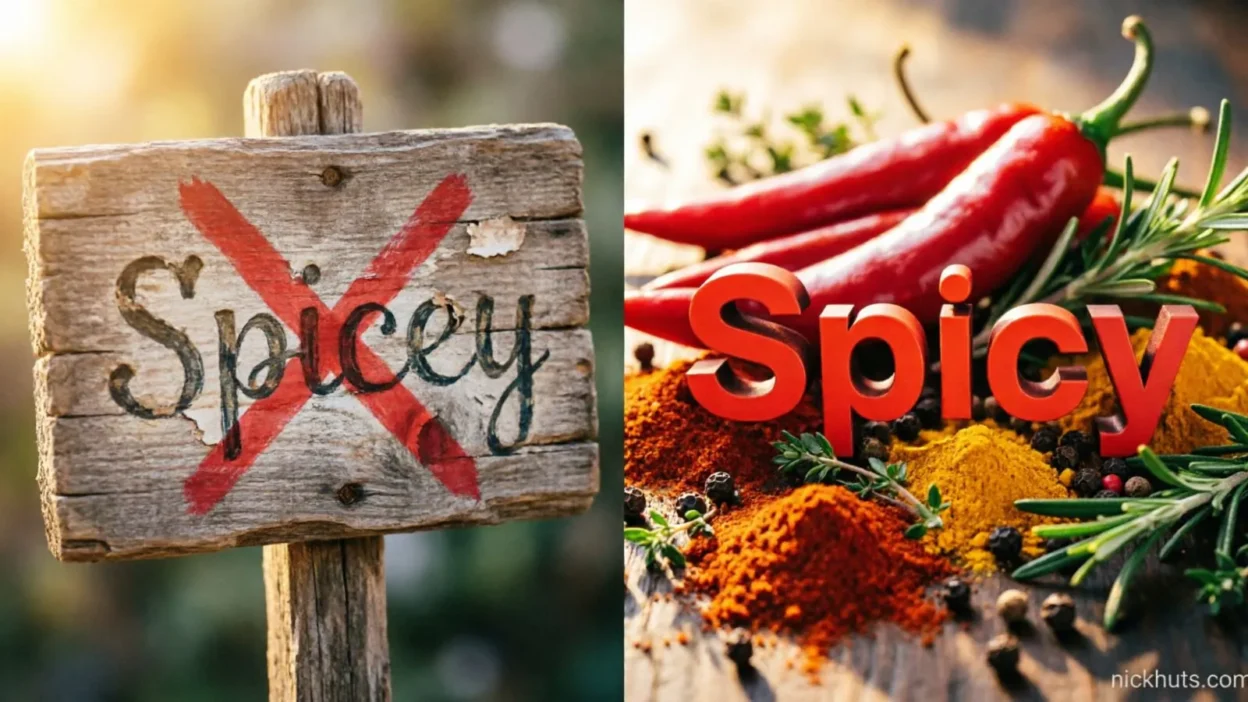
When checking Spicey vs Spicy, both a spell checker and Google consistently support spicy as the correct spelling in modern English usage today.
From my experience with word spelling questions, this confusion often begins because the terminal phoneme /i/ can fit more than one spelling pattern.
In English, endings such as -y and -ey appear in many words, and examples like dicey can make spicey seem believable. However, standard English spelling, written English, orthography, and the generally accepted form all favor spicy.
Another reason the mistake occurs is that English spelling can be ambiguous.
The connection between speech and writing is not always predictable, and phonemes are often associated with multiple spelling patterns.
On average, a single sound may have over 14 possible spellings within the spelling system.
This leads to spelling ambiguity, spelling variation, uncertainty about spelling rules, and reliance on established spelling convention. The terminal phoneme represented by /i/ may appear as -y or -ey, depending on the word.
High frequency forms usually become easier to remember over time. Most writers depend on common patterns, high-frequency patterns, and familiar language habits when they spell words.
A checker can confirm the right choice, while pronunciation, speech phonemes, lexical pattern, and spelling frequency research help explain common errors. Even when a spelling choice looks uncertain, understanding common usage makes it clear that spicy remains the standard spelling.
Quick Answer
Spicy is the correct spelling in English.
Spicey is considered a misspelling and is not recognized as a standard English word.
✅ Correct: The curry was very spicy.
❌ Incorrect: The curry was very spicey.
Whether you’re writing in American English or British English, spicy is always the accepted spelling.
What Does “Spicy” Mean?
The adjective spicy describes something that contains strong spices or has a hot, pungent flavor. It can also be used figuratively to describe something exciting, interesting, bold, or controversial.
Literal Meaning
When talking about food, spicy refers to dishes that contain ingredients such as:
- Chili peppers
- Black pepper
- Ginger
- Curry spices
- Jalapeños
- Cayenne pepper
Example sentences:
- I love spicy Mexican food.
- The soup was too spicy for me.
- She ordered the spiciest dish on the menu.
Figurative Meaning
Spicy can also describe something exciting or sensational.
Examples:
- The interview included some spicy details.
- Their conversation became surprisingly spicy.
- The article shared a few spicy rumors about celebrities.
Why Do People Write “Spicey”?
The confusion comes from the root word spice.
Many people assume that adding the suffix “-y” to spice should create spicey. However, English spelling rules often require changes when suffixes are added.
In this case:
- Base word: spice
- Remove the final “e”
- Add “y”
- Result: spicy
This follows the same pattern seen in several English words where the silent “e” is dropped before adding certain suffixes.
Examples:
| Base Word | Correct Form |
|---|---|
| Ice | Icy |
| Juice | Juicy |
| Spice | Spicy |
| Lace | Lacy |
| Price | Pricy |
Because of this spelling rule, spicey is incorrect.
Spicey vs Spicy: Side-by-Side Comparison
| Feature | Spicey | Spicy |
|---|---|---|
| Correct English spelling | ❌ No | ✅ Yes |
| Found in dictionaries | ❌ No | ✅ Yes |
| Accepted in American English | ❌ No | ✅ Yes |
| Accepted in British English | ❌ No | ✅ Yes |
| Common online typo | ✅ Yes | ❌ No |
| Recommended for writing | ❌ Never | ✅ Always |
The comparison clearly shows that spicy is the only standard spelling.
Examples of Spicy in Sentences
Seeing words in context helps reinforce correct usage.
Food-Related Examples
- This salsa is incredibly spicy.
- My brother enjoys spicy chicken wings.
- The chef created a spicy seafood dish.
- Thai food is often spicy and flavorful.
- She prefers mildly spicy meals.
Figurative Examples
- The reporter uncovered a spicy story.
- Their spicy debate attracted attention online.
- The book contains some spicy plot twists.
- Social media reacted to the celebrity’s spicy comments.
- The podcast revealed several spicy secrets.
Common Mistakes People Make
When writing about spicy foods or exciting topics, people often make predictable errors.
Mistake 1: Using “Spicey”
❌ The noodles were spicey.
✅ The noodles were spicy.
Mistake 2: Assuming Sound Equals Spelling
Many English words don’t follow phonetic expectations.
Just because spicey looks reasonable doesn’t mean it’s correct. English spelling is full of exceptions and historical patterns.
Mistake 3: Autocorrect Dependence
Some users rely entirely on autocorrect tools. While modern spell checkers usually flag spicey, older systems or informal platforms may not.
Always double-check important writing.
Easy Trick to Remember the Correct Spelling
A simple memory trick can help.
Think of these word pairs:
- Ice → Icy
- Juice → Juicy
- Spice → Spicy
Notice that the final silent “e” disappears before adding “y.”
If icy and juicy look familiar, then spicy should too.
Is “Spicey” Ever Correct?
In standard English grammar and spelling, no.
However, you may occasionally encounter Spicey as:
- A surname
- A username
- A business name
- A brand name
- A social media handle
In these special cases, it may be intentionally spelled that way. But when referring to the adjective meaning flavorful, hot, or exciting, spicy is the correct choice.
American vs British English
Unlike many English spelling differences, there is no variation here.
Both American and British English use:
✅ Spicy
Both reject:
❌ Spicey
Examples:
- American English: The tacos were spicy.
- British English: The curry was spicy.
The spelling remains exactly the same on both sides of the Atlantic.
Related Words and Synonyms
Understanding related vocabulary can improve your writing.
Food-Related Synonyms
- Hot
- Peppery
- Fiery
- Zesty
- Flavorful
- Pungent
- Seasoned
Figurative Synonyms
- Exciting
- Bold
- Sensational
- Provocative
- Interesting
- Dramatic
- Juicy
Using a variety of descriptive words can make your content more engaging and natural.
When Should You Use “Spicy”?
Use spicy whenever you’re describing:
Food
- Spicy curry
- Spicy noodles
- Spicy wings
- Spicy salsa
Conversations or Stories
- Spicy gossip
- Spicy details
- Spicy headlines
- Spicy discussions
Entertainment Content
- Spicy plot twists
- Spicy reality TV moments
- Spicy celebrity news
The word works well in both formal and informal contexts.
FAQs:
1. Is spicey or spicy correct?
Spicy is correct. Spicey is a misspelling.
2. Why do people spell spicy as spicey?
People often assume the word keeps the “e” from spice, but English spelling rules require dropping the silent “e” before adding “y.”
3. Is spicey in the dictionary?
No. Standard dictionaries recognize spicy, not spicey.
4. Is spicy used in British English?
Yes. British English and American English both use spicy.
5. Can spicy describe something other than food?
Yes. It can describe exciting, sensational, bold, or provocative topics and conversations.
6. What is the noun form of spicy?
The related noun is spice or spiciness, depending on context.
7. How do I remember the correct spelling?
Think of similar words like icy and juicy. The silent “e” is dropped before adding “y.”
8. Is spicy a positive word?
Usually yes. It often suggests strong flavor, excitement, energy, or interest, although context matters.
Conclusion
The debate over spicey vs spicy has a clear winner. Spicy is the only correct spelling recognized in modern English.
It refers to food with strong spices or, figuratively, to something exciting, bold, or sensational.
The spelling spicey appears frequently online, but it remains a typo rather than a standard word.
To avoid mistakes, remember the simple spelling pattern: ice becomes icy, juice becomes juicy, and spice becomes spicy.
If you’re writing about food, entertainment, gossip, recipes, or everyday conversations, always choose spicy for accurate and professional communication.
Actionable Takeaway
Before publishing or sending any piece of writing, quickly search for spicey and replace it with spicy.
Using the correct spelling improves clarity, professionalism, SEO performance, and credibility.